A soft toy can become part of a child’s everyday emotional landscape: tucked under one arm at bedtime, carried into an unfamiliar room, or held during a difficult goodbye. But how do plush toys support emotional development? They may offer a familiar, comforting object while children practise expressing feelings through play. Their role is supportive, not magical; a toy cannot replace attentive adults or professional care.
UNICEF and the LEGO Foundation’s 2018 report, Learning through Play, describes play as a context for developing social and emotional skills. The CDC’s developmental milestone guidance also notes that, by age two, many children notice when others are hurt or upset. These sources provide useful context, but they do not prove that plush toys alone cause emotional growth. That distinction matters.
British pediatrician and psychoanalyst D. W. Winnicott wrote, “It is in playing and only in playing that the individual child or adult is able to be creative and to use the whole personality.” (Playing and Reality, 1971.) His words help explain why a stuffed bear might become a pretend patient, a brave companion, or simply a quiet presence. Still, children do not all attach to toys in the same way. Some prefer a blanket, a book, or no comfort object at all. This introduction explores what research and child-development guidance can—and cannot—tell us about plush toys, emotional security, and growing independence. A small toy can matter. Its meaning is personal.
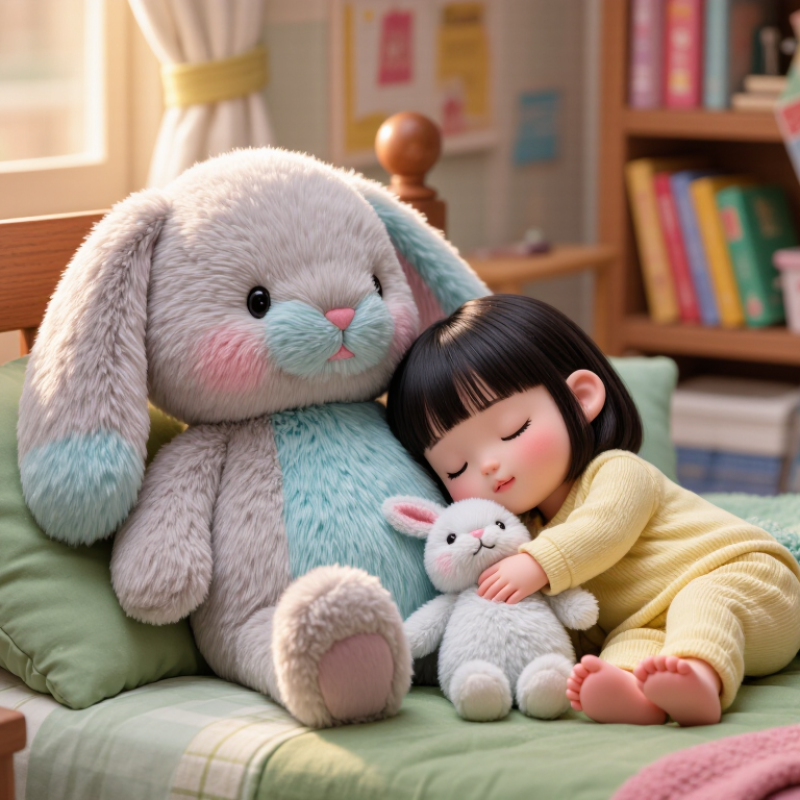
How Plush Toys Become Objects of Emotional Attachment
A plush toy often becomes special through repetition, not novelty. A child may carry it from the sofa to the car, press its worn ear during a noisy visit, then tuck it beside the pillow. Familiar texture and smell can offer a steady sensory cue when caregivers are briefly out of sight. The toy does not replace a caring adult; it can help a child manage small separations between moments of comfort.
Harvard’s Center on the Developing Child reports that more than one million neural connections form every second during the first years of life. This describes early brain development, not a proven effect of plush toys. Still, predictable comfort matters: a familiar object can support a child’s growing ability to calm down and explore.
Small, familiar, dependable.
Caregivers can notice when the toy helps, and when it becomes a way to avoid every new situation. I sometimes think adults read too much into one attachment; a child’s favorite toy may simply feel soft, smell like home, and always be within reach. That can be enough.
The Role of Plush Toys in Comfort and Emotional Security
A familiar plush toy can offer a child a steady source of comfort during uncertain moments. Its soft fabric, familiar smell, and weight in a small hand may make bedtime or a new classroom feel less daunting. The toy does not remove fear. It gives some children something concrete to hold while they settle, wait, or practice separating from a caregiver. Carrying it between home and daycare can become a small, repeatable ritual. That predictability may support emotional security, though children differ in what helps them feel safe.
Caregivers can respond without treating the toy as a cure or a sign of weakness. “You miss home,” an adult might say. “Your bear can sit beside you.” This pairs comfort with human reassurance. Not every child wants a plush toy; some prefer a blanket, story, or quiet space. That matters. A toy can also get lost, become grubby, or be hard to share. These ordinary frustrations offer chances to name disappointment and plan what might help next time. Adults may assume the toy is enough, when a child is really asking for closeness. A gentle check-in can help tell the difference.
How Pretend Play with Plush Toys Supports Emotional Expression
Pretend play gives children a low-pressure way to explore feelings they may not yet know how to name. A plush toy can become a worried patient, a shy visitor, or a bear who misses home. “The rabbit is scared of the dark,” a child might say, while tucking it beneath a blanket. The story belongs to the toy, but the feelings may echo the child’s own.
That distance can feel safer. Children can act out frustration, comfort, or separation without having to explain themselves directly. They may make a toy cry, then offer it a tissue or sit beside it quietly. These small scenes let them experiment with what comfort looks like. Caregivers can listen and follow the child’s lead, asking gentle questions such as, “What might help the bear?” There is no need to correct the story or insist that the toy feels happy. Some children prefer silence, repetition, or a very simple plot. That is still play.
Adults can make room for these moments by keeping a few familiar toys nearby and allowing unhurried play. A child might change the ending several times, or leave the toy alone halfway through. Meaning is not always obvious, and not every story needs interpretation. It can be tempting to turn play into a lesson. Sometimes, simply listening is more useful.
What Is the Role of Plush Toys in Emotional Development? How Pretend Play with Plush Toys Supports Emotional Expression
Ways pretend play with plush toys can give children opportunities to explore and communicate feelings.
| Emotional Skill |
Pretend-Play Example |
How It May Help |
Supportive Adult Response |
| Recognizing feelings |
A child says, “Teddy feels worried,” before a pretend first day at school. |
Naming a character’s feelings can give children a low-pressure way to notice and talk about emotions. |
Reflect the feeling without assuming: “Teddy seems worried. What do you think might help?” |
| Expressing difficult emotions |
A plush toy acts out being angry, left out, or disappointed. |
Speaking through a character may help a child explore feelings indirectly and find words for experiences that are hard to describe. |
Listen calmly and invite the child to share more, while letting them decide whether to connect the story to real life. |
| Practicing empathy |
The child comforts a toy that has fallen or is missing a friend. |
Taking another character’s perspective offers practice noticing what someone might feel and considering a caring response. |
Ask open-ended questions such as, “What might the toy need right now?” |
| Trying coping strategies |
A toy takes slow breaths, asks for help, or rests after a pretend setback. |
Play can let children rehearse possible responses to everyday challenges in a familiar, flexible setting. |
Model simple options, such as taking a pause or asking a trusted adult for help, without requiring the child to follow a script. |
| Building a sense of security |
A child brings a familiar plush toy into a pretend bedtime or travel story. |
A familiar object can be part of a comforting routine for some children; its effect varies from child to child. |
Allow the toy when practical, and follow any age-appropriate safe-sleep guidance. |
| Developing social communication |
Children take turns giving the toys different roles and deciding what happens next. |
Shared play can create opportunities to practice listening, turn-taking, cooperation, and negotiating ideas. |
Join the play when invited, follow the child’s lead, and help resolve disagreements with simple, respectful language. |
Note: Plush toys can provide a useful prop for imaginative play, but they do not cause emotional skills to develop on their own. Children differ in how they play and communicate; responsive relationships and a safe, supportive environment matter.
Plush Toys and the Development of Empathy and Social Skills
A plush toy can become a child’s first practice partner for caring conversations. A child may cover a teddy with a small blanket, notice its “sad” face, and ask what it needs. By imagining another’s feelings, children rehearse empathy in a familiar, low-pressure setting. The toy does not teach empathy by itself. Adult responses matter, too. When a caregiver says, “Maybe bear feels left out,” a child hears language for noticing emotions and can respond in their own words.
Pretend play also offers simple ways to practice social skills. Children may give each toy a role, take turns speaking, or negotiate who gets the blue cup. Small scenes, real practice. With siblings or friends, a plush toy can help start a shared story, though disagreements may still happen. That is part of the learning, not proof that play has failed. Some children prefer quiet, solo play, and that can be meaningful as well. It is easy to overstate what a toy can do; development varies, and no single plaything guarantees kindness. Watching how a child includes others in play offers a more useful clue than counting toys.
How Their Emotional Role Changes Across Childhood
A plush toy can serve a different emotional purpose at each stage of childhood.
For toddlers, a familiar soft toy may make bedtime or separation from a caregiver feel less abrupt. Its flattened ear or worn fabric can offer a predictable sensation in an unfamiliar room.
Small comfort.
The American Academy of Pediatrics’ 2018 clinical report, “The Power of Play,” describes play as important to children’s social-emotional development. A cuddly toy can become part of that play, though it is not a treatment for anxiety or a substitute for responsive adults.
In preschool years, children may give a toy a voice, then use its pretend worries to explore their own. A child might make a plush bear “miss” a parent, then act out a reunion. As children grow, the toy may shift from a character in shared play to a private source of reassurance, or fade from daily life altogether. There is no fixed timetable. Common Sense Media’s 2017 census reported that children ages zero to eight averaged two hours and 19 minutes of screen media daily. That figure does not measure comfort or emotional growth, but it highlights why hands-on play still deserves space. Adults can notice whether a toy helps a child settle, while staying curious about what the child is trying to express. Sometimes the meaning is unclear—even to the child.
Conclusion
Plush toys can become meaningful objects of emotional attachment, offering children a familiar source of comfort and security during moments of stress, change, or loneliness. Their soft texture and steady presence can help create a sense of safety, while caring for or talking to a plush toy gives children a gentle way to explore feelings. Through pretend play, children can act out experiences, express emotions they may find difficult to describe, and imagine different ways to respond to challenges.
These play experiences can also nurture empathy and social skills. Children may practice listening, sharing, comforting, and understanding another perspective as they include a plush toy in stories and games. The emotional role of plush toys often changes with age: a young child may rely on one for reassurance, while an older child may use it more as a companion or reminder of earlier comfort. In these ways, how do plush toys support emotional development? They provide a familiar, flexible space for comfort, expression, and social learning.

 STTY Toys